


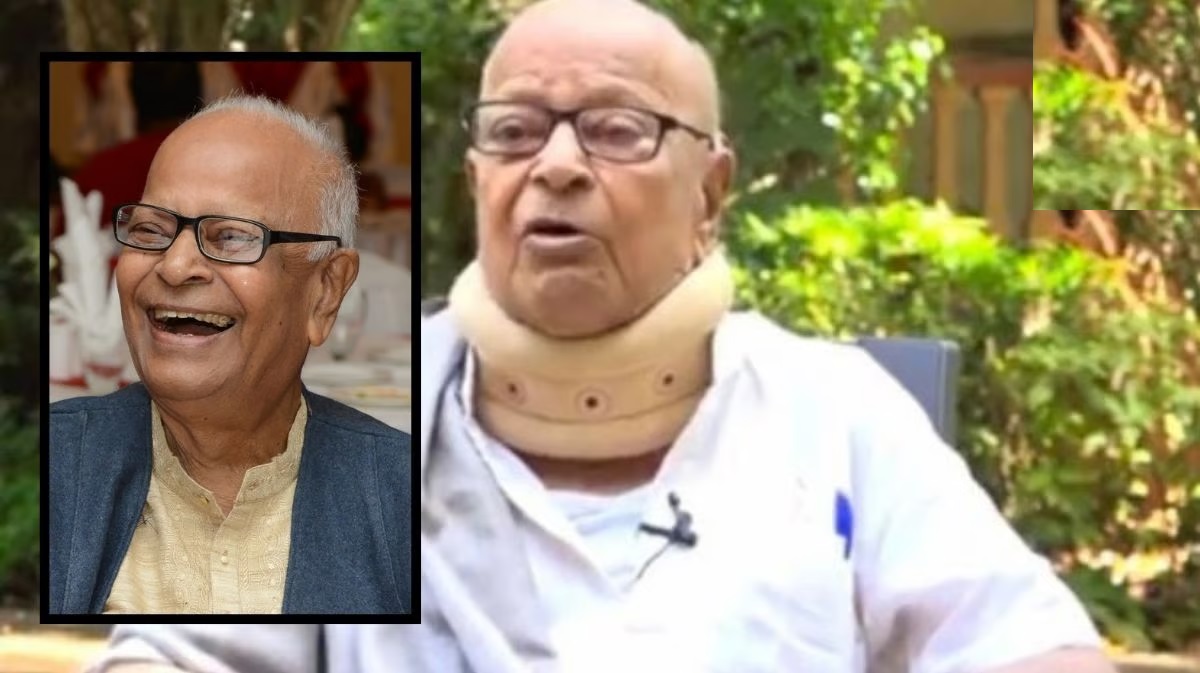
Ramkrishna Naik, a rare theatre personality who wore his Hindu identity on his sleeve besides rendering yeoman social service, breathed his last yesterday (29 January) after a spell of brief illness. The Mumbai and Goan theatre artiste was 96 and a resident of Comba, Margao.
Naik made the old age home, Sheha Mandir, an institute he founded and nurtured, his home years ago. He was born in Goa on 3 November 1928 but migrated to Mumbai in the early 1950s to be a chartered accountant. There, he joined the Goa Hindu Association, one of the oldest cultural and social welfare organisations established by a group of native Hindus from Goan in 1919.
In 1956, Naik effectively took over the reins of the Kala Vibhag (art department) of the Goa Hindu Association and thus began a glorious career in theatre as well as social service. Naik had a rare ability to identify talent and good plots for plays, which resulted in Kala Vibhag turning into a sensation. Naik also drew Pt Jitendra Abhisheki to the art of theatre. Abhisheki embellished the art department with his mind-blowing vocal renditions of Hindustani classical music.
Naik produced plays of veteran playwrights like Vasant Kanetkar, VV Shirvadkar, Jaywant Dalvi among others through the Kala Vibhag, which drew theatre lovers to the auditorium in hordes.
After he returned to Goa in the 1980s, Naik joined the Gomant Vidya Niketan in Margao and initiated the theatre movement in Goa. His contribution to Goa Marathi Vidnyan Parishad and Samaj Seva Sanhh deserves special mention.
Naik played a stellar role in setting up the Sneha Mandir in Bandora, Ponda, another establishment of the Goa Hindu Association. He was actively involved in the activities of the old-age home until he was let down by old age himself. The facility is known for geriatric care for the aged.
The towering theatre personality shied away from publicity, though, believing also in giving away his earnings as contributions to the cause he served.
Peers remember Naik as an “epitome of total sacrifice”, which perhaps explains why the state hardly recognised Goa’s veteran freedom fighter. For one, he did not lament the lack of state attention.
Last evening, the mortal remains of Naik were consigned to flames at the Margao Hindu crematorium.

