


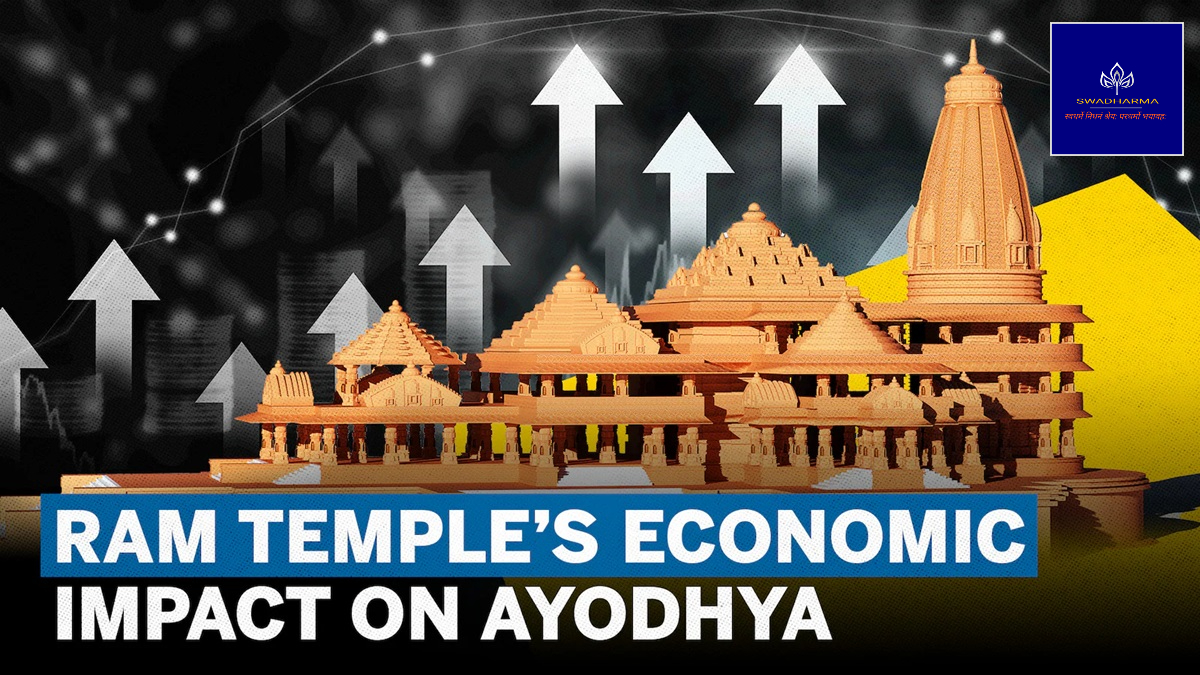
Following the inauguration of the Ram temple in Ayodhya on 22 January, not only has it provided spiritual solace to Rama’s devotees but also emerged as the primary driving force behind the thriving local economy of Ayodhya and the enhanced contribution of the district towards Uttar Pradesh’s State Domestic Product. Since the consecration of the temple, there has been a daily influx of over two lakh devotees and tourists, which has not only bolstered Ayodhya’s economy but has also led to a remarkable rise in its per capita income.
Ayodhya has now become a favoured destination, attracting tourists from both local and international origins. Their contributions to the district’s flourishing economy include staying in local accommodations, shopping at nearby stores, visiting temples, and purchasing souvenirs such as replicas of the Ram temple, sweets, and the Shri Ram flag.
Two months since the consecration of Ram Lalla’s murti at the Ram temple, the socio-economic landscape of Ayodhya has undergone a significant transformation. Despite many industries operating in the informal sector, the substantial financial inflow brought about by the daily visitors has been noteworthy.
This economic growth is evident across various sectors, from craftsmen to flower vendors, retailers, and the hospitality industry, all of which have seen a quadruple increase in their profits.
Especially in the hospitality sector, the surge in tourists has led to a significant rise in the occupancy rates of hotels, guest houses, and homestays, thereby propelling Ayodhya’s economy forward.
For example, Surya Tripathi from Ramayana Hotel mentioned that the demand for rooms has been steadily rising since the inauguration of the Ram temple. Luxury rooms ranging from Rs 7,000 to Rs 20,000 are available, and more than 150 new hotels and homestays have emerged near the temple, creating new employment opportunities.
Additionally, products available in the markets, ranging from decorative items to Ram idols, as well as souvenirs, have experienced a significant increase in sales. Craftsmen are also crafting toys using leftover materials from idol-making, thereby contributing to the growth of local income and work opportunities.
Ramkumar, the shopkeeper, has reported a significant boost in his daily earnings. Previously ranging between Rs 400 and Rs 500, his income has now surged by an impressive Rs 2,500 per day.
Sushil Jaiswal, the president of the Traders Association, highlighted the positive impact on the local economy in Ayodhya due to the opening of the Ram temple. He mentioned that the city has attracted international attention, leading to growth in various businesses. Jaiswal also noted a significant rise in property prices, with some areas near the temple experiencing a tenfold increase.
Vinod Kumar Srivastava, the general secretary of the Uttar Pradesh Economic Association, emphasized the significant economic impact observed in Ayodhya, as all sectors have experienced substantial growth. He stated that the comprehensive development would lead to an increase in people’s income and employment opportunities, ultimately fostering a positive effect on Ayodhya’s economy.

