


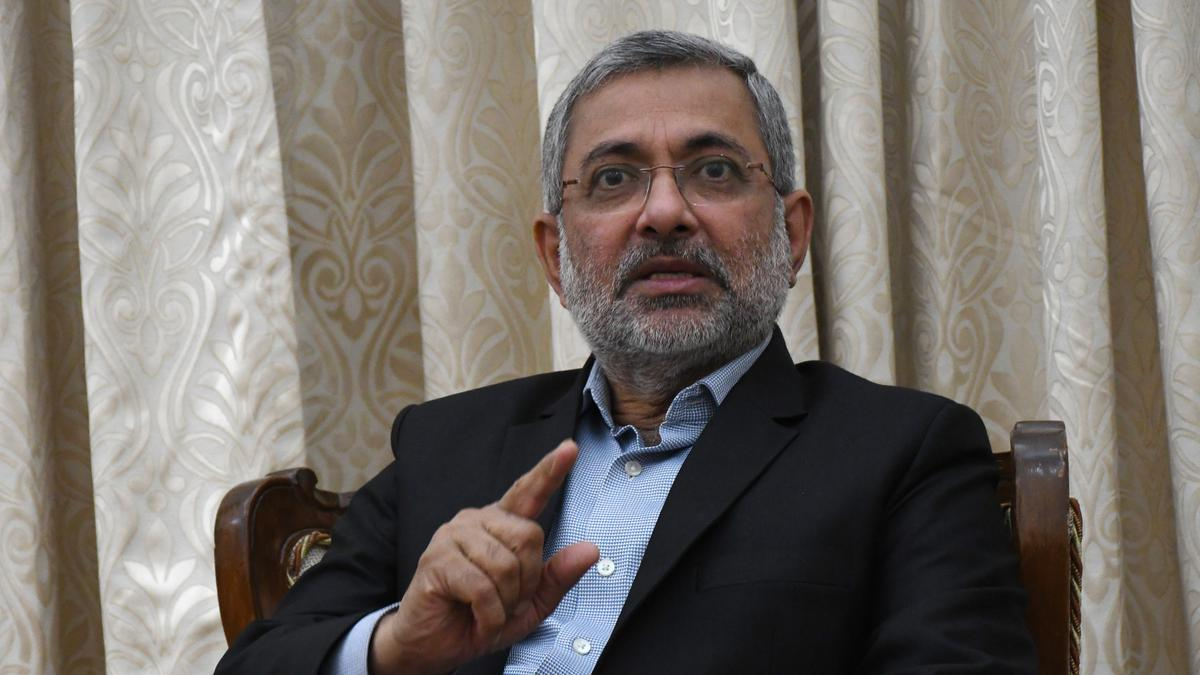
Justice Kurian Joseph, who retired from the Supreme Court in November 2018, raised concerns about the Supreme Court’s motto “यतो धर्मस्ततो जयः” during a seminar hosted by the Campaign for Judicial Accountability and Reforms (CJAR), an event organised by left-liberals and the anti-BJP/RSS/Prime Minister Narendra Modi portal The Wire. Justice Joseph emphasised that “truth”, as enshrined in the Constitution of India, should take precedence over dharma, as though they were mutually conflicting terms.
Table of Contents
The former judge also questioned why the Supreme Court should have a motto different from the national motto.
Justice Joseph said,
Truth is the constitution. Dharma is not always the truth. Dharma is the discharge of your duty in terms of the need of the hour.
In a previous seminar, Justice Joseph had drawn parallels between the Catholic Church and the Preamble of India thus:
The Catholic Church is one that has always assimilated in itself all the traditions and cultures brought in by the believers from all over the world. This is similar to the preamble of our Constitution, which starts with the word ‘We’.
Justice Joseph had said on that occasion, “One person who holds this Church in a single entity is the Pope”.
The Supreme Court’s motto, derived from the Mahabharata, focuses on morality, ethics and justice, reflecting the values that resonate with people across generations.
That is to say that the retired judge finds Christianity in consonance with the secular institution that the Indian judiciary is but Hinduism in contravention of the modern system of determining the truth in legal cases.
Where Justice Joseph went wrong
Notably, Justice Joseph did not say “truth” could be one of many synonyms of “dharma” or, in other words, the Sanskrit word may not always refer to truth; he said dharma was not truth! But “dharma” in Hinduism is synonymous with justice and righteous duty and not a word for “religion” except in rare, ritualistic usages.
According to Manu Smriti (6.92), as reported by Hindu Existence, Dharma is defined with its ten attributes as “धृति: क्षमा दमोऽस्तेयं शौचमिन्द्रियनिग्रह:। धीर्विद्या सत्यमक्रोधो दशकं धर्मलक्षणम्॥” meaning steadiness, forgiveness, self-control, abstention from unrighteous appropriation, purity, control of the senses, discrimination, knowledge, truthfulness and absence of anger are the ten aspects of dharma.
The website also cited Yagyavalk Smriti (1.122) where the nine signs of dharma have been described as, “अहिंसा सत्यमस्तेयं शौचमिन्द्रियनिग्रह:। दानं दमो दया शान्ति: सर्वेषां धर्मसाधनम्॥” [Non-violence, truthfulness, purity, restraint of the senses. Charity, restraint, mercy and peace are the means of religious duties for all.]
Hindu Existence mentions the Bhagavat Purana too that talks of 30 signs of dharma in 7th canto (सप्तम स्कन्ध): ”सत्यं दया तप: शौचं तितिक्षेक्षा शमो दम:।अहिंसा ब्रह्मचर्यं च त्याग: स्वाध्याय आर्जवम्॥” [Truthfulness, compassion, austerity, purity, tolerance, serenity, self-control, nonviolence, celibacy, renunciation, study of the Vedas and simplicity]
Justice Joseph not comfortable with roster either
During his speech at the event, he also discussed the operations of the Supreme Court, specifically focusing on the Master of the Roster system and administrative committees. While his intentions seemed to be centred around promoting transparency and fairness through stricter regulations, his remarks could inadvertently limit the chief justice of India’s discretion. This might result in bureaucratic inflexibility within the judiciary.
The ex-judge emphasized that legal challenges change over time, necessitating flexibility in administrative matters to allow the Supreme Court to adapt to these changes effectively. This approach ensures that the apex court can adequately address the demands of justice.
In his address, Joseph also directed his concerns towards separatist advocate Prashant Bhushan, highlighting issues with the “arbitrary” assignment of cases to specific judges.
In December 2023, Bhushan had written a critical letter to the CJI regarding cases assigned to Justice Bela M Trivedi. Additional complaints were made by Dushyant Dave and Abhishek Manu Singhvi about irregularities in cases heard by Justice Trivedi. Former Justice Joseph suggested that people could predict the outcome of cases based solely on the judges presiding, hinting at a predetermined mindset among judges, although he clarified that this was not his intention.
It is a known fact that lawyers in the Supreme Court often seek out favourable benches. If unsuccessful, they may opt to withdraw their pleas, as seen in the recent case of Umar Khalid, a terror suspect, where his lawyer, Kapil Sibal, withdrew the bail plea to explore other options in a lower court.
Observers believe that the decision to withdraw was influenced by the bench composition, which included Justice Bela M Trivedi. If the arguments put forth by former Justice Joseph and Prashant Bhushan gain traction, the Supreme Court may find it challenging to assign cases without external pressures.

