

HomeNewsPuja to continue in Gyanvapi cellar: HC

Puja to continue in Gyanvapi cellar: HC

This sub-case began when Shailendra Kumar Pathak, as a hereditary priest, sought permission to enter the 'tahkhana' and resume the puja his maternal grandfather Somnath Vyas used to do there

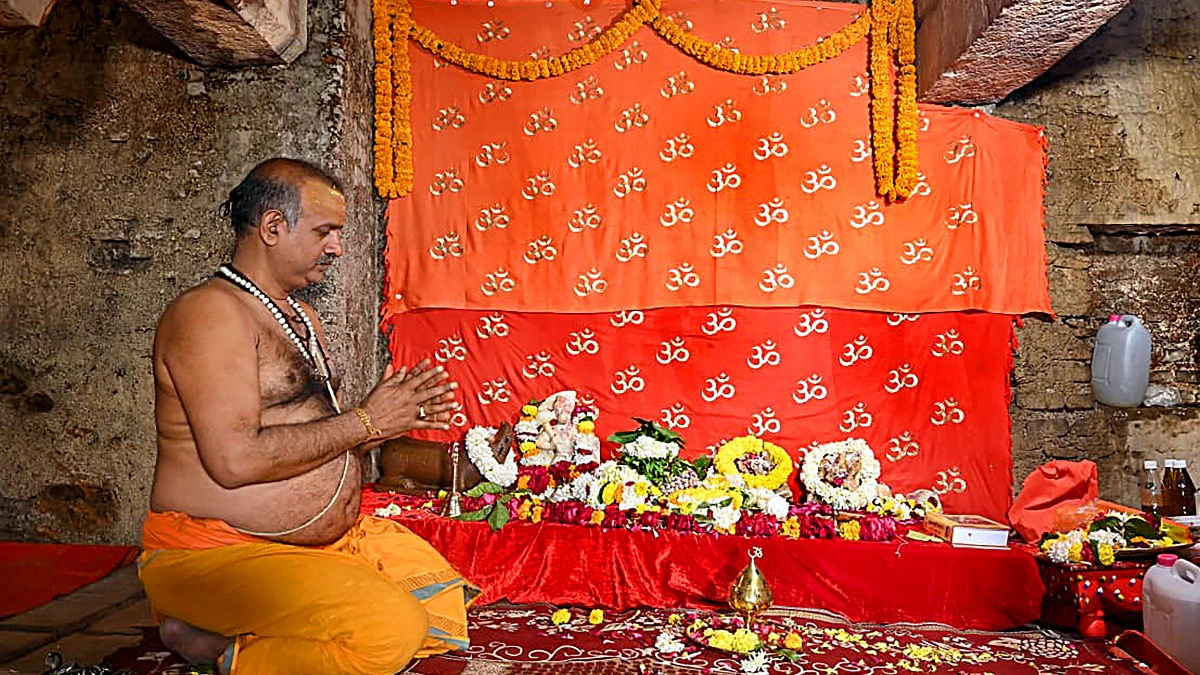
The petition challenging the Varanasi district court’s decision to permit Hindus to conduct puja in a cellar of the Gyanvapi mosque was dismissed by the Allahabad High Court today. “Hindu Prayers in the ‘Vyas Tehkhana’ will continue,” Justice Rohit Ranjan Agarwal said dismissing the mosque committee’s petition.

Last month, the Varanasi district court had ruled that a priest could perform puja in the southern cellar of the Gyanvapi mosque known as “Vyas Tehkhana”.

Shailendra Kumar Pathak had filed the petition, stating that his maternal grandfather Somnath Vyas had been offering prayers until December 1993. Pathak, as a hereditary priest, had requested permission to enter the ‘tahkhana‘ and resume the puja.

Pathak contended in his petition that his maternal grandfather conducted puja at the site until 1993 when the Mulayam Singh Yadav government in Uttar Pradesh mandated the closure of the cellar without obtaining a court order.

The Gyanvapi mosque has four cellars in the basement, and one of them is still under the ownership of the Vyas family.

The petitioner’s claim was denied by the mosque committee, stating that there were no idols in the cellar, therefore prayers were not conducted there until 1993.

Following the Supreme Court‘s rejection of their plea against the Varanasi district court order, the committee approached the high court on 2 February. After listening to both sides, the Allahabad High Court postponed its decision on February 15.

An Archaeological Survey of India study of the Gyanvapi structure, conducted as part of a related case by order of the Varanasi district court, indicated that the mosque was built during Aurangzeb’s reign on the site of a Hindu temple.

- Advertisement -

Expositions

How Bal Gangadhar Tilak transformed Ganesh Chaturthi

How Bal Gangadhar Tilak transformed Ganesh Chaturthi from a private household ritual into a grand public festival, uniting communities and fuelling India’s freedom movement

Kali Puja vs Lakshmi Puja: 5 Divine Contrasts Between Diwali In Bengal & North India

Kali Puja vs Lakshmi Puja: The historical, theological and cultural roots of the difference between Diwali celebrations in Bengal and north India explained

Why Gupt Navratri is observed, how, when and by whom

Adhering to the rituals associated with Gupt Navratri, as mentioned in Devi Bhagavata Purana, is believed to bring wealth, prosperity, and happiness into one's life
Swadharma
Swadharmahttps://swadharma.in/
Swadharma is a one-stop web destination for everything Hindu. We will cover history, theology, literature and rituals of all sects of Hinduism one by one besides news of the state of the Hindu community worldwide through videos, podcasts, reports and articles.

Leave a reply

Please enter your comment!
Please enter your name here

This site uses Akismet to reduce spam. Learn how your comment data is processed.

More like this

आरक्षण की आड़ में प्रतिभा का कत्ल? SC-ST Act के कथित दुरुपयोग से समानता का गला घोंटता कानून

सामाजिक न्याय की ढाल जरूरी, लेकिन क्या संरक्षण की व्यवस्था कहीं समान अवसर, मेरिट और कानून के निष्पक्ष इस्तेमाल पर भारी पड़ रही है? आरक्षण से लेकर एससी-एसटी एक्ट तक व्यवस्था के भीतर सुधार की जरूरत पर गंभीर सवाल

Conversion mafia का फैलता जाल

Conversion mafia पर ग़रीब की मजबूरी, आस्था पर प्रहार के आरोप और हिंदू समाज की चिंता: कहाँ खड़ी है क़ानून की लड़ाई

Kali Puja vs Lakshmi Puja: 5 Divine Contrasts Between Diwali In Bengal & North India

Kali Puja vs Lakshmi Puja: The historical, theological and cultural roots of the difference between Diwali celebrations in Bengal and north India explained