


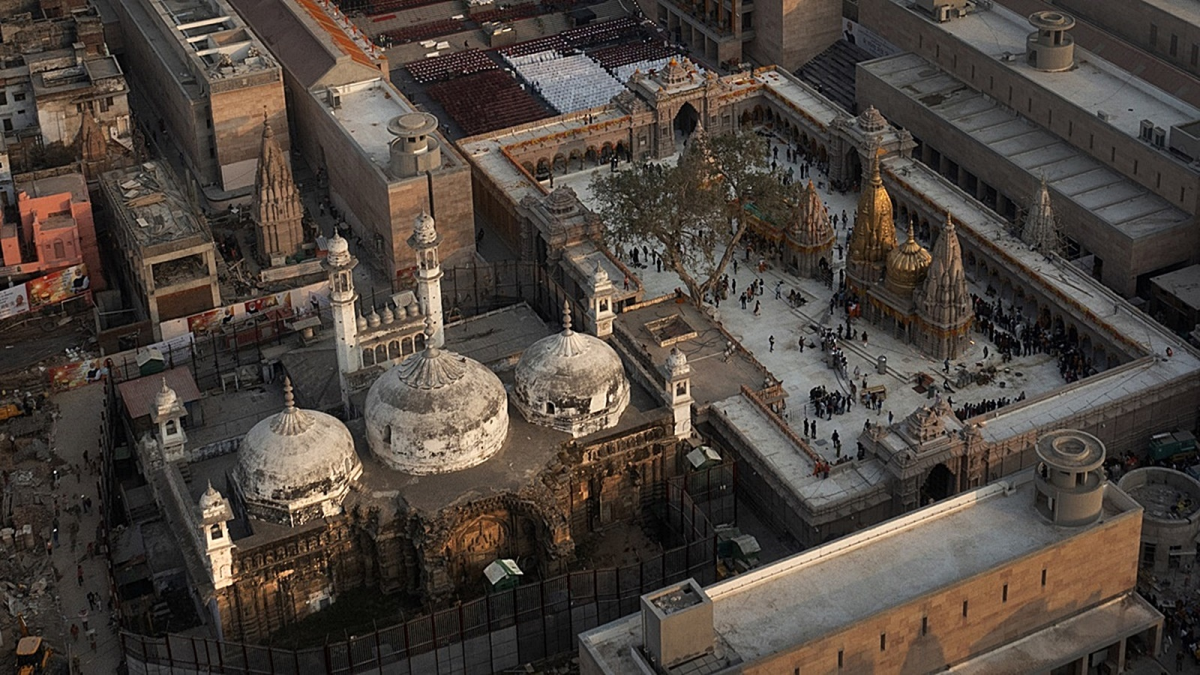
The Vishwa Hindu Parishad (VHP) on 27 January said that the Archaeological Survey of India (ASI) report had confirmed that the Gyanvapi Mosque in Varanasi was built after the demolition of a “grand temple” at the site. The organisation demanded that the structure be declared a Hindu temple and handed over to the community.
The VHP demanded further that Hindus be allowed to perform seva puja of the Shiva Linga found in the “so-called wuzukhanah area” at the disputed site.
“The evidence and findings collected by the ASI prove that the religious nature of this place of worship was in existence on 15 August 1947 and is currently a Hindu temple,” VHP working president Alok Kumar said in a statement. He demanded further, “Thus, as per Section 4 of the Places of Worship Act, 1991, the structure should be declared a Hindu temple.”
The VHP also called upon the Intezamiya Committee that manages the mosque to agree to “respectfully shift” the Gyanvapi Mosque to some other suitable place and hand over the original site of Kashi Vishwanath to the Hindu community.
Kumar said, “The VHP believes that this noble action will be an important step towards building cordial relations between the two major communities of India.”
Two days ago after the ASI survey report on the Gyanvapi mosque complex was made public, Advocate Vishnu Shankar Jain, who is representing the Hindu litigants in the Kashi Vishwanath Temple versus Gyanvapi Mosque case, had said that the mosque was constructed after demolishing a pre-existing temple.
“The Gyanvapi structure should be handed over to the Hindus,” Kumar said, adding that evidence collected by the ASI “confirms that the mosque was constructed after the demolition of a grand temple.” He said that a part of the temple structure, particularly the western wall, was the remaining part of a Hindu temple.
Kumar said, “There is no doubt from the Shiva Linga present in the ‘wazukhanah‘ that the structure is not of a mosque. The discovery of the names of Janardana, Rudra and Umeshwara in the inscriptions found in the structure is clear evidence of its being a temple.”

