


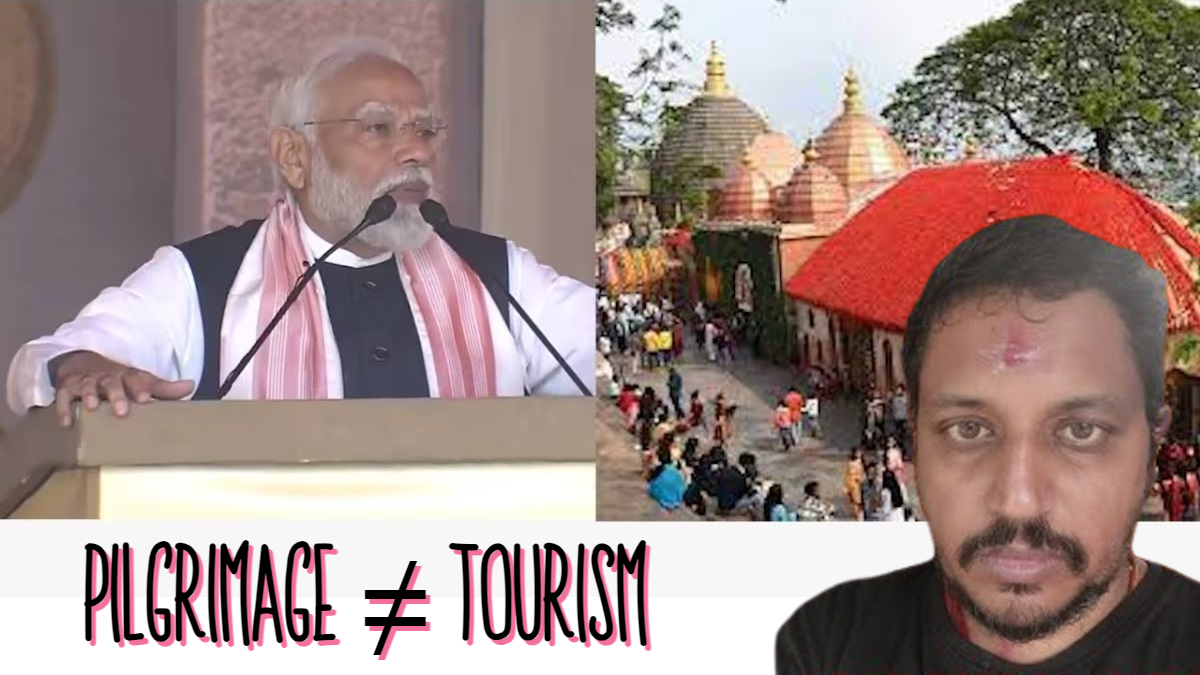
Prime Minister Narendra Modi in an address at a huge public rally in Guwahati said today that the Kamakhya Divyalok Pariyojana would boost tourism big-time in Assam. He said once the project was complete, it would give great pleasure to devotees who would throng the temple and also offer convenient darshan facilities to the people of Assam.
“I visited various pilgrimage centres across the country recently. We witnessed the major inauguration of the Ram Temple in Ayodhya. After Ayodhya, I have come to the gates of Ma Kamakhya. I have got the opportunity to lay the foundation of the Kamakhya Divyalok Pariyojana project today. Once this project is complete, it will give a lot of happiness to devotees, and a lot more devotees will turn up each year,” said Prime Minister Modi.
The Kamakhya Divyalok Pariyojana is an ambitious project with an estimated cost of Rs 498 crore. Also known as the Maa Kamakhya Access Corridor, the project has been sanctioned under the Prime Minister’s Development Initiative for North Eastern Region (PM-DevINE) scheme. However, while it is expected to provide world-class amenities to pilgrims visiting the Kamakhya temple, a contention that the Modi government cannot appreciate the difference between pilgrimage and tourism remains.
Last year, when the administration took measurements of the areas marked for the corridor, tantra expert Rajarshi Nandy expressed a concern it would compromise the sanctity of sacred space around Ma Kamakhya in Guwahati. At the same time, residents around the holy site on the Nilachal Hills do not wish their area to be disturbed.
Nandy holds that a shrine of some antiquity — Kamkhya is at least 3,000 years old — accumulates spiritual energy of the kind that cannot be felt in idols bought from the market. While development is welcome, he says, the apprehension is about the wear and tear the shrine may undergo, which may strip a part of the spiritual power.
Nandy is particularly concerned about the construction in the hills that the corridor entails, which may affect the streams of water flowing into the shrine. Consuming the water is a part of the rituals involved in reaching out to Ma Kamkhya.
Nandy is not known to be affiliated with any political group, unlike some holy men who have opposed corridors ordered by the Modi government at other pilgrim centres. Nandy has been on record supporting the Kashi Vishwanath Corridor, to the chagrin of many of his fellow travellers who raised the bogey of destruction of some Lingas during the construction.
Meanwhile, the issue of the rights of priests has been partially resolved. In November 2023, the Supreme Court set aside the 2017 order of the Gauhati High Court that had directed the deputy commissioner to receive donations of devotees for ‘developmental activities’ at the Kamakhya Temple and maintain separate accounts for the purpose. The Supreme Court ordered that the high court order would not apply, given the existing arrangement of managing the affairs of the temple by the Doloi (chief priest) society.
In other words, tradition has to be maintained and not fiddled with in the name of ‘vikas‘ (development).
The highest court’s decision was based on the assurance by the Assam government that the Doloi Samaj had been maintaining the spiritual aspects of the abode of Ma Kamakhya for centuries very efficiently and the government would not interfere in that tradition, nor order modern constructions in places considered spiritually inviolable.

